Spanish Translation

Friday, May 4, 2012

Integrating Science, Math and Art

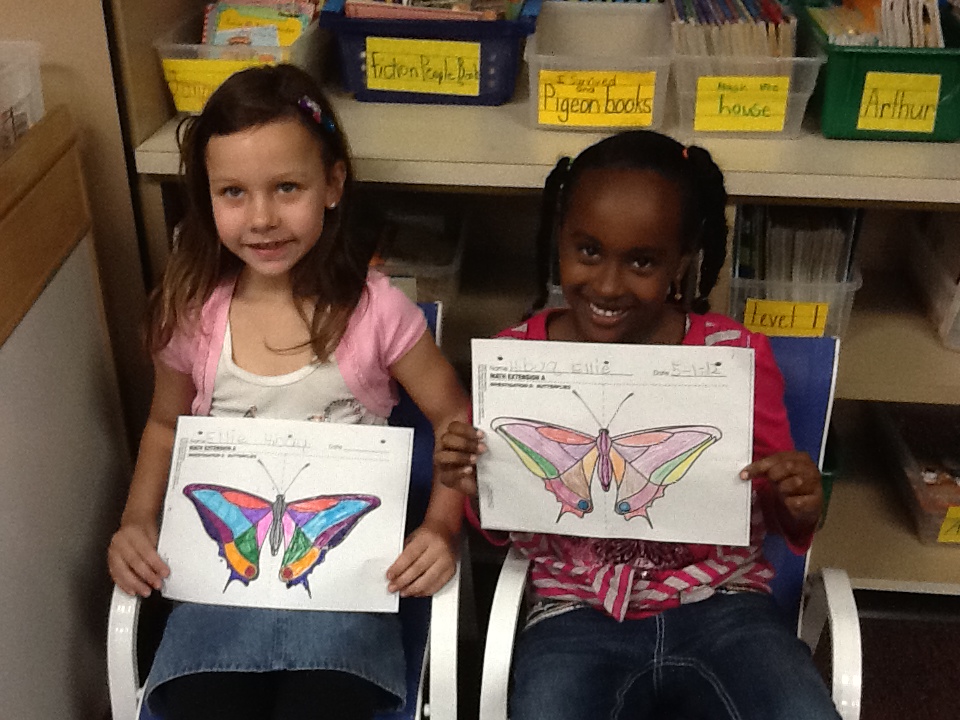
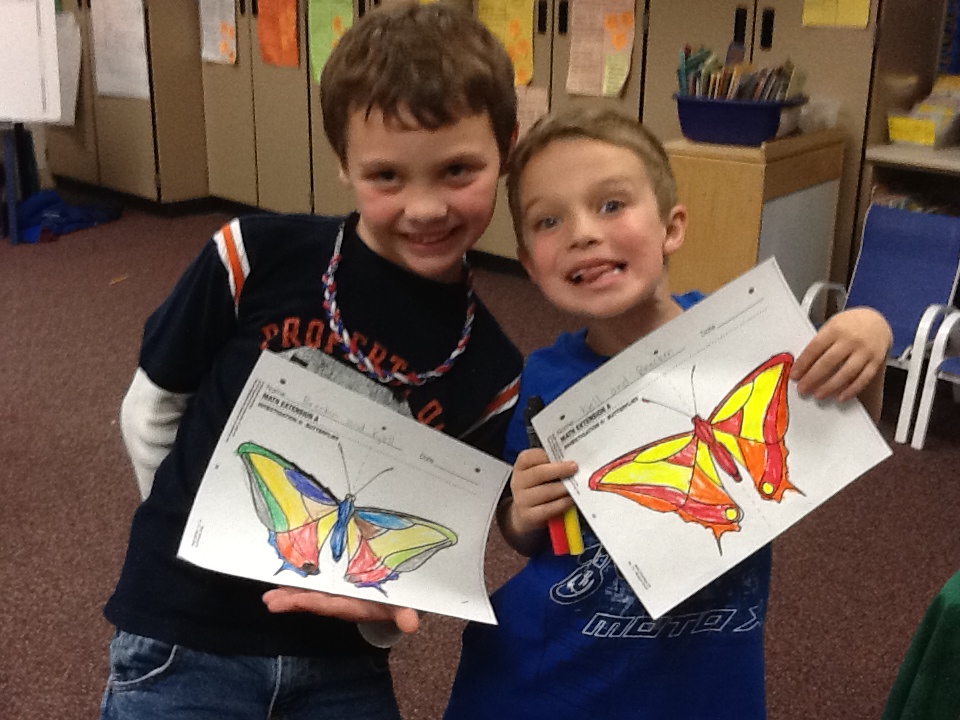
We have integrated math and art into our study of the butterfly.  Each first grader colored only half
of a butterfly and then traded with another friend.  They colored the other half of their partner's butterfly, making sure to follow the same pattern of colors.  We learned about some math vocabulary that day:  half  and symmetry.  I was even challenged with a fun pattern of colors by my great partner TC!


Our Sea Monkeys are growing!


We have been observing the life cycle of the Brine Shrimp.  We call them Sea Monkeys.  They started as the tiniest little eggs.  They started to grow, but were still too tiny to see well.  We've been feeding them and keeping them warm and they are growing fast now.  We love to watch how they swim!


"The Life Cycle of the Butterfly"

We received 6 caterpillars to observe.  We watched them eat enough to grow big and fat in the "larva" stage.  We observed the caterpillars crawl to the top of their home (cup) and attach themselves with silk to the top of the cup (tissue paper).  In the first photo you can see that two caterpillars have put themselves into a "J" shape to prepare to wrap themselves into a chrysalis.  One caterpillar has already created it's chrysalis and is now in the "Pupa" stage.  When we had all 6 in the pupa stage we attached the tissue paper to the top of the butterfly cage.  We created life cycle plates to show the 4 stages of the butterfly life cycle:  egg, larva, pupa and butterfly.  We are eagerly waiting for our first butterfly to appear!


"We Can Measure Objects in our World"


We have been using rulers, shoes, pencils, unifix cubes and even our iPads to measure objects at school and home.  We discovered that it is important to use a standard measurement tool like the ruler to measure with.  We found that measuring with objects like pencils doesn't create the same measurements for everyone.  We were able to record our measurements on our iPads to share our data with the class.


"CGI Story Problems on the iPads"


During our CGI (story problem) time each day, we problem solve on our iPads and record our voices to share in our small strategy groups for all of our friends to hear.  Finally, we have 2 friends come up and model their work for the class.  We've done #132 stories so far this year!


Thursday, May 3, 2012

More Synthesizing

Today I had my first grade friends pair up and reread a book that we have read as a class in the last 2 months.  Then I had them record their thinking on a large piece of paper.  As they were working I went around and talked with them about how their thinking was evolving.  I used Debbie Miller's analogy of synthesizing: "throwing a rock into a pond: first there is the splash, and then the water ripples out, making little waves that get bigger and bigger."  After they finished recording the details from their story, they recorded the big idea/what the author wanted you to learn from the book.  Take a look...


detail from the story + detail from the story+ detail from the story = big idea/lesson

Synthesizing-Non-Fiction Style

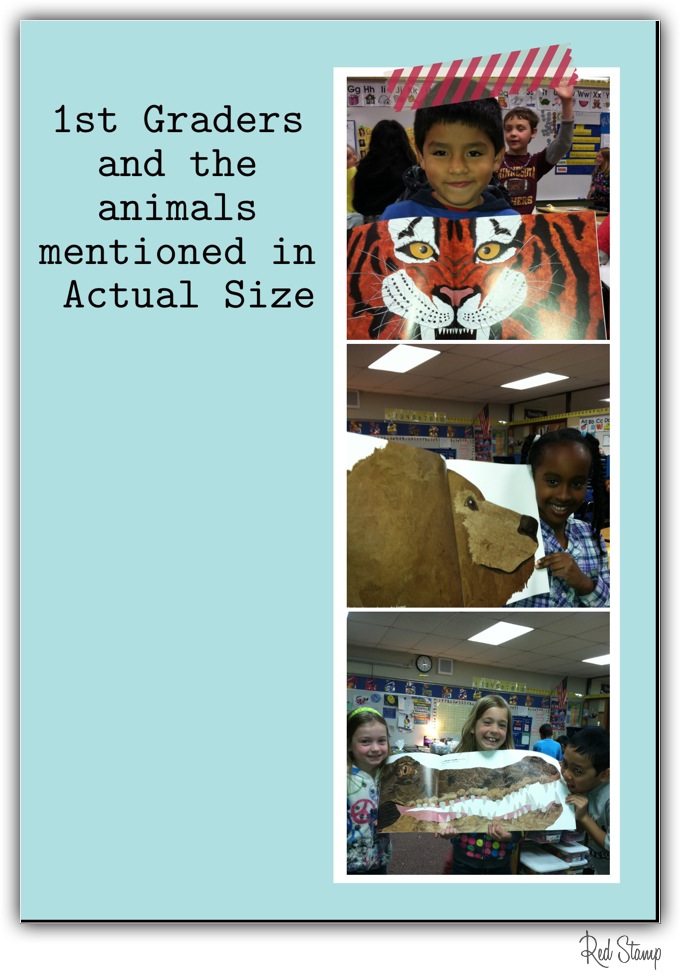
As we were reading Actual Size by Steve Jenkins, the kids recorded their thinking on their thinking strips like we did above.  They enjoyed this non-fiction book and were proud of themselves when they discovered the big idea.  Take a peek...